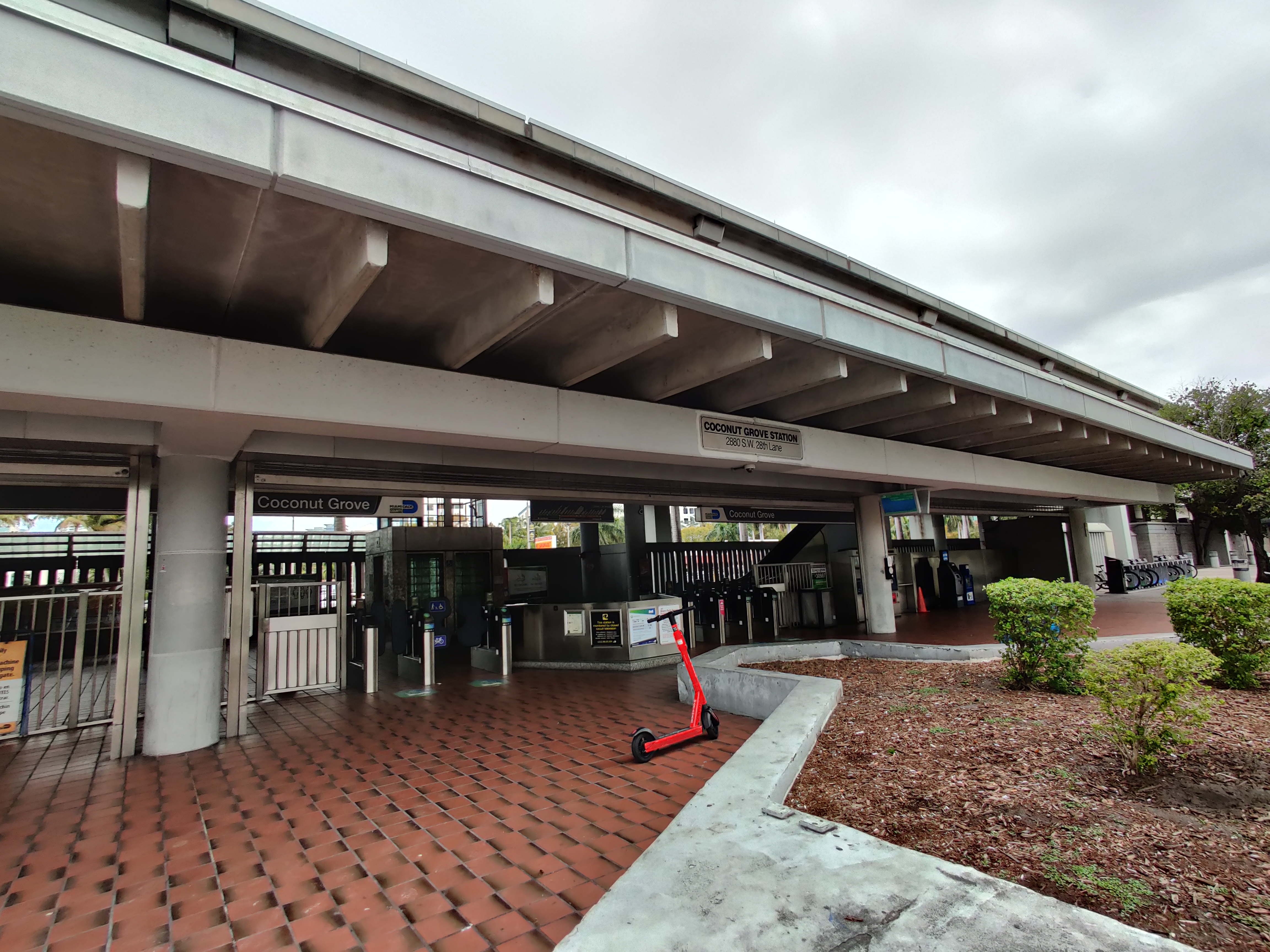
Residents who depend on for-hire vehicle services or commute along Miami-Dade's transit corridors have two reasons to pay attention to the county's Transportation Committee meeting on Tuesday, July 14.
The committee will hold public hearings on a pair of ordinances at 9 a.m. in the Commission Chambers at the Stephen P. Clark Government Center, 111 NW 1st St., Miami. One would loosen age limits on certain passenger-for-hire vehicles. The other would expand the county's Rapid Transit Zone near the Coconut Grove Metrorail Station, extending a pattern of transit-oriented development decisions that use the same SMART Corridor Subzone framework governing the South Dade TransitWay through Palmetto Bay and Cutler Bay.
Older vehicles could stay on the road longer
Ordinance 260868, sponsored by Commissioner Natalie Milian Orbis, would let circulator and fixed-route passenger motor carrier vehicles operate until they reach 20 model years or 350,000 miles, whichever comes first. Under current county code, those vehicles must be retired at 15 model years. General passenger motor carrier vehicles face a 10-year limit that would remain unchanged.
The change was triggered by a Coral Gables resolution adopted Tuesday, March 10, 2026, urging the county to extend the cap. The full Board of County Commissioners passed the ordinance on first reading Tuesday, June 2, 2026, by a 9-1 vote.
South Dade circulator routes would be eligible to keep vehicles in service five additional model years under the change, provided they pass all required county inspections.
Transit zone expansion near Coconut Grove Metrorail
Ordinance 260620, sponsored by Commissioner Raquel A. Regalado, would fold a private parcel at 3000 SW 28 Lane into the SMART Corridor Subzone of the Rapid Transit Zone. The property sits within a quarter-mile of the Coconut Grove Metrorail Station.
The county's SMART Corridor Subzone, created by Ordinance 22-106 in September 2022, allows higher-density, mixed-use development near transit stations. Within a quarter-mile of a station, projects can reach up to 60 units per acre and eight stories. Developments with more than four residential units must include 12.5% workforce housing.
The ordinance would also establish new procedures letting developers within 500 feet of the Rapid Transit Corridor Bicycle and Pedestrian Area offer public benefits, such as funding for trail maintenance and security, in exchange for density or floor-area-ratio bonuses.
The full commission approved the measure unanimously, 12-0, on first reading Monday, May 5, 2026. Commissioner Regalado sponsored a similar expansion near the University Metrorail Station in Coral Gables in September 2025, which the Transportation Committee forwarded with a favorable recommendation.
How the SMART Corridor framework connects to South Dade
Tuesday's hearing does not propose changes near any South Dade station. But the legal framework it uses applies to all SMART Plan corridors, including the South Dade TransitWay. That 20-mile BRT line, which opened new stations Monday, October 27, 2025, at a cost of roughly $368 million, runs parallel to U.S. 1 through Palmetto Bay and Cutler Bay with stops at Coral Reef Drive, Caribbean Boulevard, and other local stations. It carries more than 9,500 daily riders across its two routes.
Meanwhile, Miami-Dade Mayor Daniella Levine Cava warned in a memo released the week of July 7, 2026, that building out the remaining five SMART corridors faces a $7.6 billion shortfall over 20 years, according to WLRN reporting. Commissioners are expected to take up the issue at their Tuesday, July 21, 2026, meeting.
How to weigh in
The Transportation Committee meets Tuesday, July 14, 2026, at 9 a.m. at the Stephen P. Clark Government Center, 111 NW 1st St., Miami. Residents can register to speak on the first floor, watch a live broadcast in the lobby, or stream the meeting at miamidade.gov/webcasting. For accessibility accommodations, call (305) 375-2035 or email [email protected].




.jpg)