The Associated Press called Florida Amendment 3 approved. Unofficial Florida Election Watch returns checked at 1:02 p.m. EST Nov. 4 showed 4,917,482 yes votes statewide, or 61.99%, above the 60% passage threshold. Palmetto Bay and Cutler Bay officials have projected millions of dollars in annual revenue losses as the expanded homestead exemption takes effect.
The constitutional amendment, which needed 60% to pass, was leading with about 63% of the vote on election night, the Miami Herald reported. It raises the homestead exemption for non-school taxes to $150,000 in 2027 and $250,000 in 2028. The current maximum homestead exemption is $51,411, according to the Florida Department of Revenue.
The measure also caps annual assessment increases on non-homesteaded properties at 5% per year. That applies to businesses, second homes and rental properties.
Palmetto Bay stands to lose the most in South Dade. The village has 73.3% homesteaded properties, which outgoing Mayor Karyn Cunningham said makes it the most reliant on single-family property taxes in Miami-Dade County, CBS News Miami reported in September.
Village estimates showed Palmetto Bay could lose $2.2 million, or 8% of its property tax revenue, in the first year. The following year, that loss could exceed $3.5 million, or 14%.
Cunningham said before the vote that the village's current budget was recently approved, but the amendment's cuts would hit during the next budget cycle. Councilman Steve Cody told CBS News Miami in September that leadership was looking at spending cuts, including scaling back the village's contracted partnership with the sheriff's office.
"That may mean that we're going to have to cut back and lose a couple of deputies," Cody said.
Cutler Bay also projects large revenue losses. Town staff estimated the expanded homestead exemptions could reduce annual revenue by about $2.56 million in fiscal year 2027–28 and $5 million in fiscal year 2028–29, according to an Oct. 8 budget workshop covered by the South Dade News Leader.
At that workshop, the Town Council reviewed a hypothetical cost-cutting scenario. Staff identified an approximately $1.98 million operating reduction target. Among the possibilities: eliminating recreation programs and their staffing costs, totaling about $857,000. Those programs include after-school care serving 70 students, a summer camp for 100 students, a STEM camp for 40 students and 17 annual special events.
Staff also outlined about $307,000 in potential public works savings, including a 50% cut to landscape maintenance. No budget reductions or tax increases were approved at the workshop.
The amendment carries countywide consequences, too. Miami-Dade estimates it would collect about $385.8 million less in property tax revenue at current rates beginning October 2027, growing to $696.7 million in October 2028, according to the county's Amendment 3 information page. The county listed fire rescue, animal services and parks among the service areas affected.
Statewide, state economists projected local governments could lose roughly $5 billion in the first year and nearly $12 billion annually by 2031, according to 1000 Friends of Florida, a nonprofit that opposed the measure.
Gov. Ron DeSantis pushed for the property tax plan for more than a year, the Herald reported. Voters approved it despite opposition from a coalition that included Florida sheriffs, law enforcement officers and firefighters.
Local governments now face a choice: cut spending or potentially levy new fees and taxes to offset the loss. DeSantis will likely call lawmakers back to Tallahassee for a special session to write implementing legislation, the Herald reported.
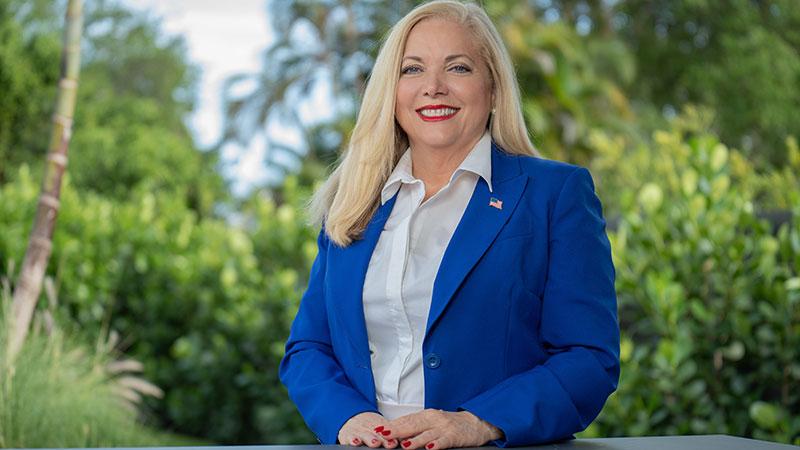
Palmetto Bay and Cutler Bay will navigate the budget fallout under new leadership. With 100% of precincts reporting on election night, Karen Baez-Wallis led the Palmetto Bay mayor's race with 45.71% of the vote, and Suzy Lord led the Cutler Bay mayor's race with 34.54%, according to NBC 6 Miami-Dade results.