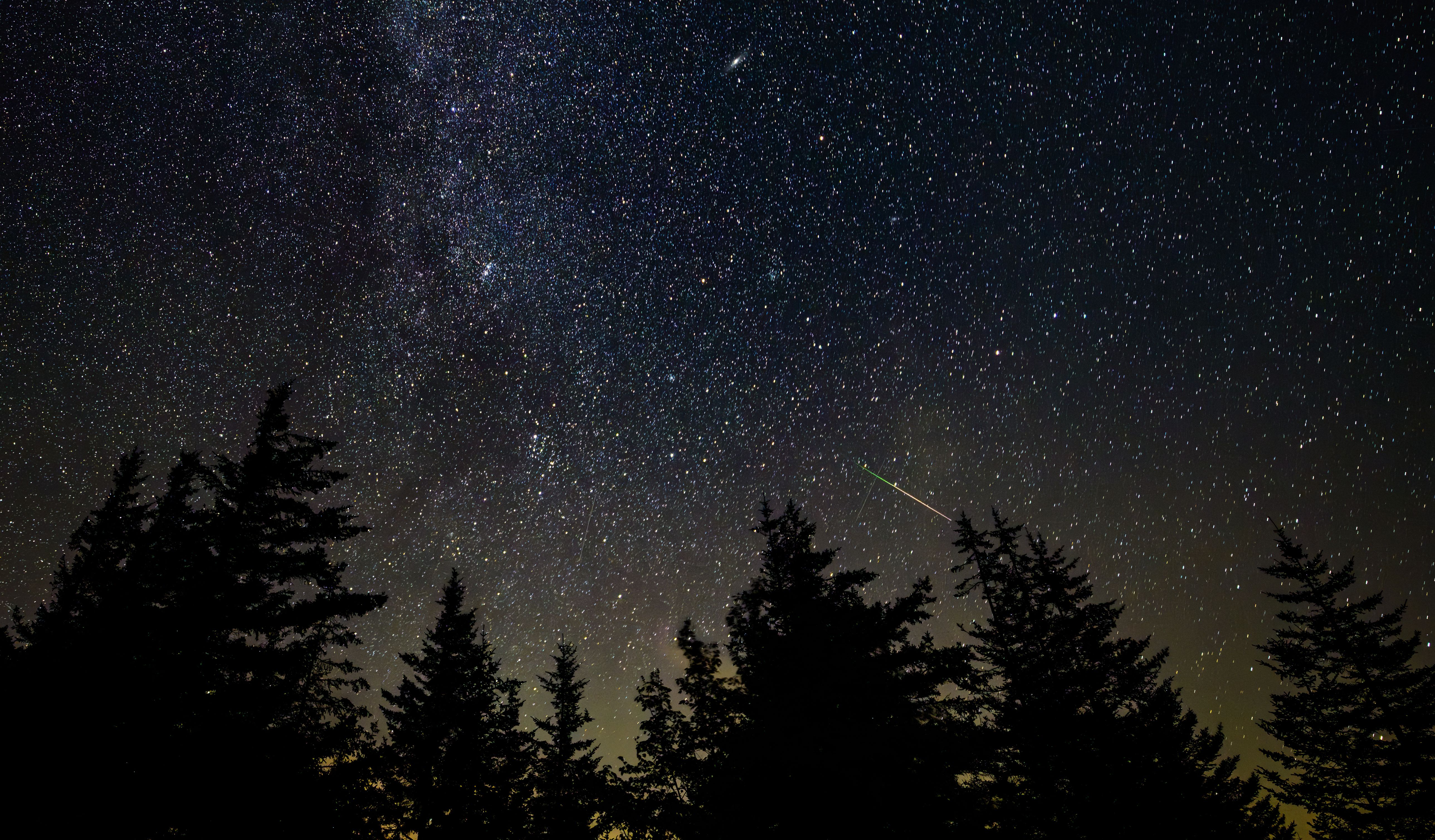
A meteor shower peaks over Palmetto Bay on Wednesday, Sept. 9, opening a month of free skywatching that includes Venus at its brightest and a Harvest Moon paired with Saturn.
NBC 6 South Florida published a September astronomy guide listing events visible from backyards across South Florida. Most need nothing more than clear skies and a lawn chair.
Minor Meteor Shower Peaks Overnight Wednesday
The September Epsilon Perseids peak overnight between Wednesday, Sept. 9, and Thursday, Sept. 10. The American Meteor Society classifies it as a minor shower. Steve Luxenberg, president of the South Florida Amateur Astronomers Association (SFAAA), said observers should face northeast from a dark spot around midnight but should temper expectations.
"Observing meteor showers requires no telescope, only a chair, bug spray, and patience," Luxenberg said. "Always know where you are going, don't travel alone, [and] safety is the most important rule."
At best, only a few meteors will be visible per hour, Luxenberg said.
Venus, Crescent Moon Pair Up Monday
On Monday, Sept. 14, a crescent moon and Venus will appear together in the western sky after sunset. The planet is setting earlier each evening, so timing matters.
Venus Reaches Its Brightest Point Friday
On Friday, Sept. 18, Venus reaches its brightest point of the month. NASA's September skywatching guide noted the planet will appear low above the western horizon shortly after sunset, outshining every star around it. Astronomy.com reported Venus will be gone within about an hour of sunset, so a clear view of the horizon helps.
Neptune Reaches Opposition, Best Viewing Window
Neptune reaches opposition on Friday, Sept. 25, the point when the planet sits directly opposite the sun as seen from Earth. The University of Arizona's Flandrau Science Center and Planetarium calls this the best time to observe our farthest planet, NBC 6 reported. Viewers will need binoculars or a telescope.
The SFAAA's Fox Observatory at Markham Park in Sunrise offers free public viewings every Saturday night from sunset to about 11:30 p.m. The observatory is at 16001 West State Road 84, Sunrise. No admission fee. Call 954-384-0442 for details.
Harvest Moon Rises Alongside Saturn
The Harvest Moon rises Saturday, Sept. 26. NASA noted Saturn will appear nearby, with Neptune completing a wide triangle in the sky. Saturn is visible to the naked eye; Neptune requires binoculars or a telescope.
Where to Find the Darkest Skies
For the darkest skies near South Florida, Big Cypress National Preserve in Ochopee earned International Dark Sky Park status in 2016. The preserve covers more than 729,000 acres and is described as one of the darkest areas east of the Mississippi, where the Milky Way is visible with the naked eye.
The Big Cypress Swamp Welcome Center is at 33000 Tamiami Trail East, Ochopee. Ranger-led astronomy programs run December through March, but the preserve is open for independent stargazing year-round. Neighboring Everglades National Park also offers dark skies, though it does not hold a formal dark-sky certification.
The Fox Observatory's free Saturday viewings at Markham Park continue weekly through the fall.



.jpg)