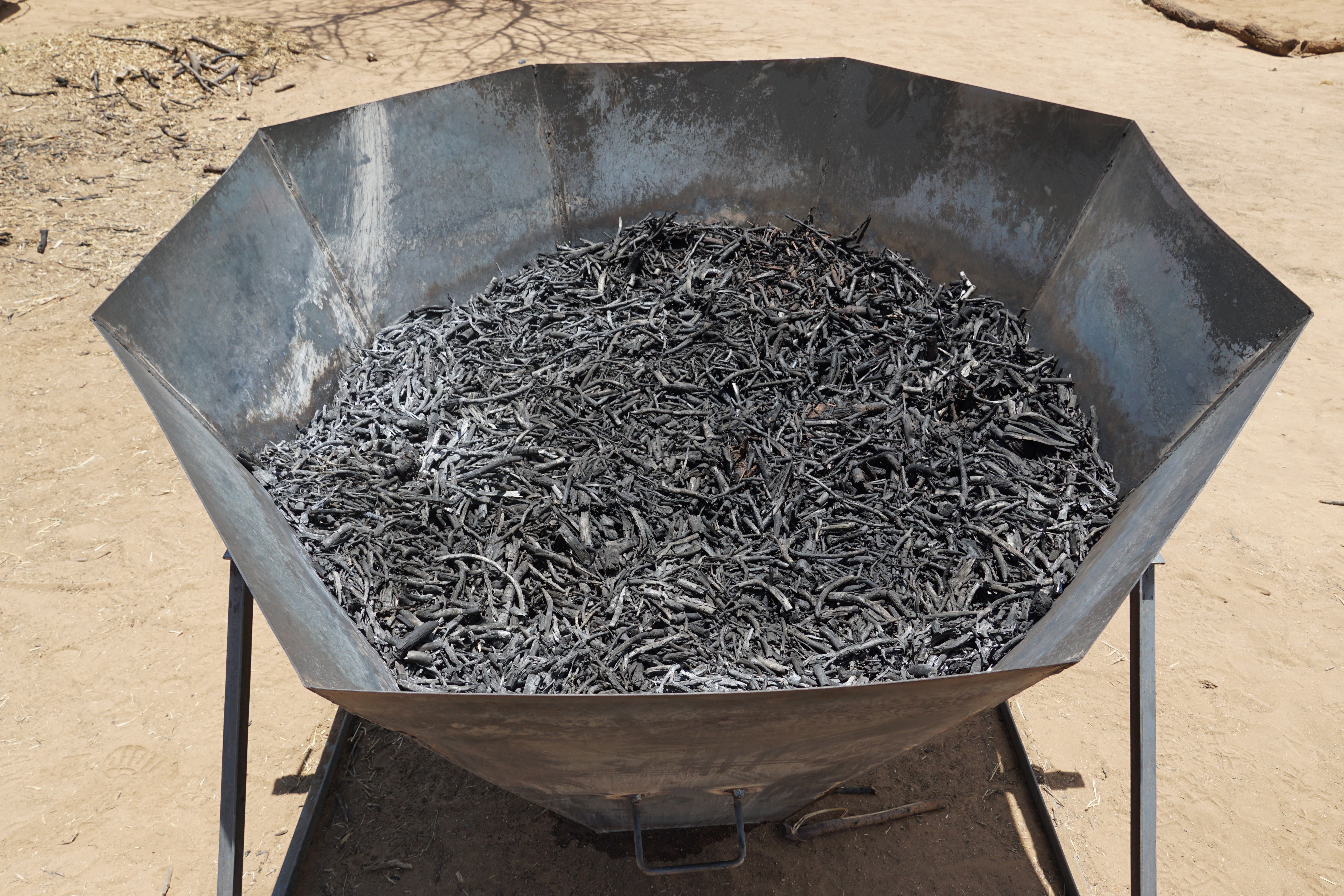
A machine operating atop the South Dade Landfill near Cutler Bay is turning yard clippings and branches into a charcoal-like material that could help Miami-Dade County reduce landfill waste and protect local waterways.
The pilot program converts green waste into biochar, a carbon-rich material that can improve soil, filter pollutants from water and store carbon. County officials say the early results are promising enough to consider the technology as part of Miami-Dade's long-term waste reduction strategy, WPLG Local 10 reported Thursday, Oct. 15.
The experiment comes as Miami-Dade faces growing pressure to find alternatives to landfilling more than 5 million tons of waste generated countywide each year.
Cutler Bay yard waste becomes reusable material
Fort Lauderdale-based Clean Earth Innovations operates the pilot at South Dade Landfill, where clean yard debris supplied by the town of Cutler Bay is processed into biochar.
The company received $100,000 through the Miami-Dade Innovation Authority's Solid Waste Challenge after being selected as one of three winners in November 2025.
Miami-Dade County showcased the technology in February, describing it as the county's first pilot to convert clean yard debris into biochar.
"This is really big. This is big," Roy Coley, Miami-Dade County's chief regulatory and utilities officer, told Local 10. "They're taking green waste that normally would be placed in the landfill, cause a waste of space, and actually turn it into a usable product."
The machine feeds chipped branches and other organic material into a rotating kiln heated to between 1,400 and 2,000 degrees Fahrenheit.
The process, known as pyrolysis, heats organic matter with little or no oxygen, converting it into biochar rather than allowing it to decompose.
Clean Earth Innovations CEO Harold Gubnitsky told Local 10 that a byproduct of the process can also be converted into electricity.
The system has a reported processing capacity of approximately 4,000 tons of green waste annually, although the county has not released figures showing how much material the pilot has processed so far.
Green waste, including branches, grass clippings and fallen trees, accounts for nearly 12% of the material Miami-Dade sends to landfills, according to Local 10.
Biochar could help protect Biscayne Bay
County officials are also examining the environmental uses of the material, particularly its potential to improve soil and water quality.
Biochar can help soil retain moisture and nutrients, potentially reducing the need for fertilizer and irrigation. Depending on how it is produced and applied, it can also store carbon for extended periods.
Coley told Local 10 that carbon-based materials produced through the process could help capture contaminants in water and wastewater, potentially benefiting Biscayne Bay.
The county has identified soil improvement, water filtration and pollution reduction as possible applications. However, the finished material must undergo testing and regulatory review before broader use.
The environmental benefits will also depend on the technology's actual emissions, energy consumption and how the biochar is ultimately used.
County faces shrinking landfill capacity
Miami-Dade generates more than 5 million tons of waste annually, with the county's Department of Solid Waste Management responsible for handling approximately 2 million tons.
Some estimates suggest the county has only five to seven years of remaining landfill capacity, according to Local 10.
The situation became more difficult after a fire destroyed Miami-Dade's waste-to-energy incinerator in 2023, forcing the county to rely more heavily on transporting garbage to disposal facilities elsewhere.
The Miami Times reported that the county expected to spend approximately $65 million transporting waste during the fiscal year.
Miami-Dade Mayor Daniella Levine Cava and Deputy Mayor Coley unveiled the county's Zero Waste Master Plan on July 31.
The plan outlines 31 strategies to reduce waste, expand recycling, process organic materials and preserve landfill space over the coming years.
County officials have described a long-term goal of diverting approximately 77% of waste from disposal. Recent estimates of the county's recycling and diversion rate vary, with the Miami Times reporting approximately 32% and Refresh Miami citing a Florida Department of Environmental Protection figure of 37%.
Aneisha Daniel, director of Miami-Dade County Solid Waste Management, described the master plan as "an actionable framework that is already guiding how we rethink waste management in Miami-Dade County," according to Community Newspapers.
The biochar pilot represents one potential component of that effort. While the existing machine can process only a small portion of the county's annual waste, officials believe the technology could eventually be expanded to handle larger quantities of yard debris.
The county has not announced a timetable or funding commitment for expanding the program.
The full Zero Waste Master Plan is available on Miami-Dade County's website.
.jpg)