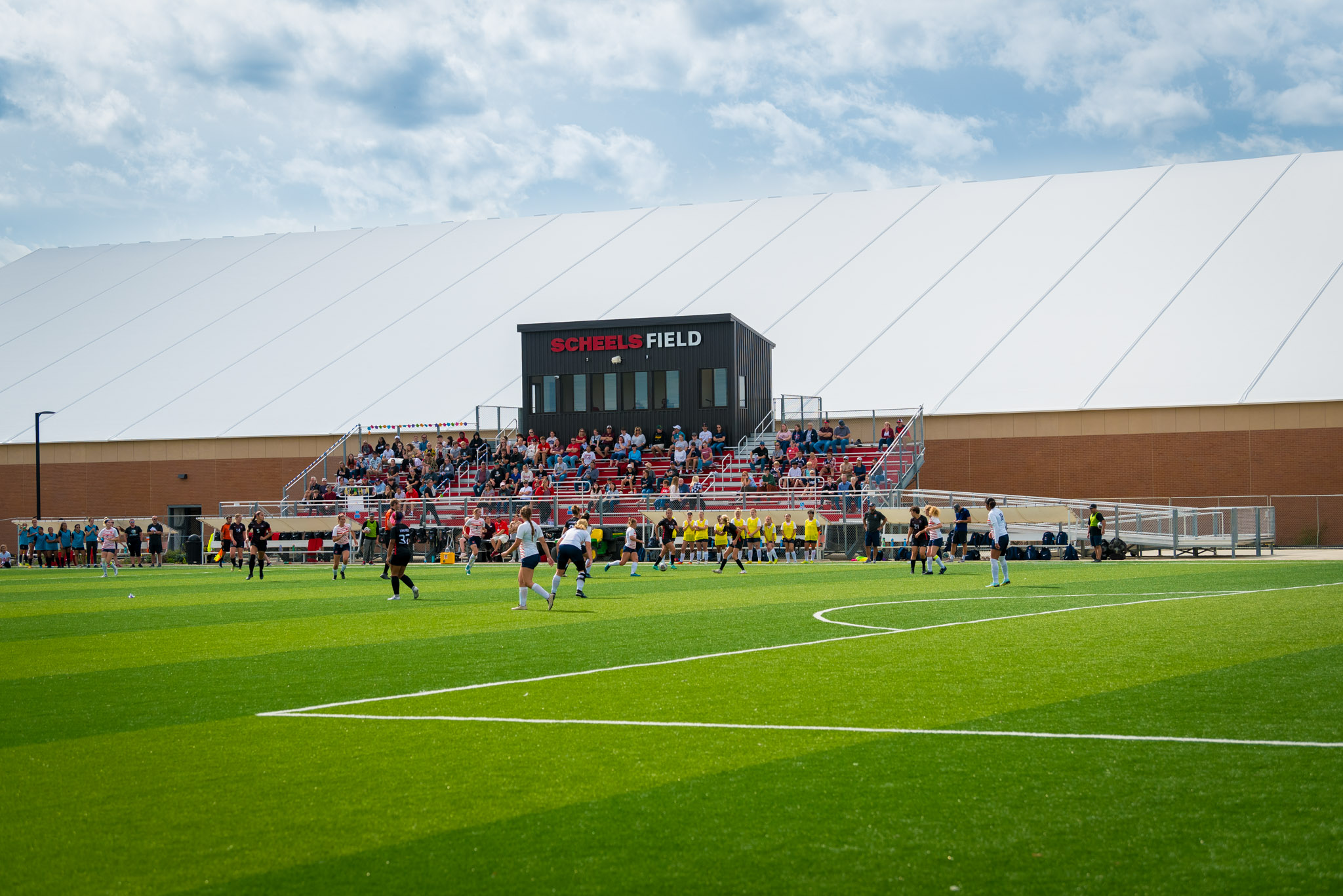
A 16-year-old Coral Reef High School soccer player told the Miami-Dade School Board on Tuesday that rubber pellets from artificial turf get lodged in his slide-tackle wounds, and the board responded by voting to create an advisory committee examining whether synthetic turf belongs on school fields.
"The pebbles get stuck in the wound. It's quite painful," Marcel Borges told board members at the Aug. 11 meeting.
Borges, a defender who plays at artificial turf parks outside school, said the burns are harsher than those from natural grass and harder to clean. Coral Reef's own field is natural grass, he said, but so old and unmaintained that teams don't use it. He'd still take it over synthetic turf.
The resolution, introduced by board member Joe Geller, directs the superintendent to convene a panel of health experts, environmentalists, students and PTA representatives to study the health, environmental and lifecycle cost implications of artificial versus natural turf. The panel's recommendations are due in December 2026, pushed back from an original October deadline.
No money has been allocated for the review.
The board stripped a proposed pause on new artificial turf installations from the resolution before passing it, choosing only to study the issue rather than halt projects already in the pipeline.
What prompted the vote
A letter signed by about 100 parents, teachers and students urged the district to stop installing artificial turf and consider native-plant landscaping instead. Michele Drucker, president of Florida Green Schools, led that effort and questioned at the meeting whether Florida's heat accelerates turf breakdown and what that means for student health, according to the Miami Herald.
Research cited during the discussion found artificial turf can reach temperatures up to 90 degrees hotter than natural grass. Herald testing recorded 121 degrees Fahrenheit on synthetic turf at Little Haiti Soccer Park after an afternoon storm. Doctors have noted 110 degrees is enough to cause a burn.
The district's position
School Board Chair Mari Tere Rojas defended artificial turf, noting that South Florida's climate makes natural grass expensive to maintain with irrigation, fertilizer and pesticides. Heavy rainfall can turn real grass fields muddy and uneven, she said, increasing injury risk.
Raul Perez, the district's chief facilities design and construction officer, told the board no injuries from turf heat had been reported and said the district in recent years shifted to preferring artificial turf after feedback from principals. The district recently installed new synthetic turf at Traz Powell Stadium, now branded Adidas Field at Traz Powell Stadium.
What it means locally
Coral Reef High School, at 10101 SW 152nd St., serves students across Palmetto Bay and surrounding communities. While its own field remains natural grass, the district's preference for synthetic turf means future installations at area schools are possible. Which specific Palmetto Bay and Cutler Bay fields currently use artificial turf was not detailed in the board discussion.
The panel's recommendations are due in December 2026, when the Facilities and Construction Committee is expected to take them up.

.jpg)