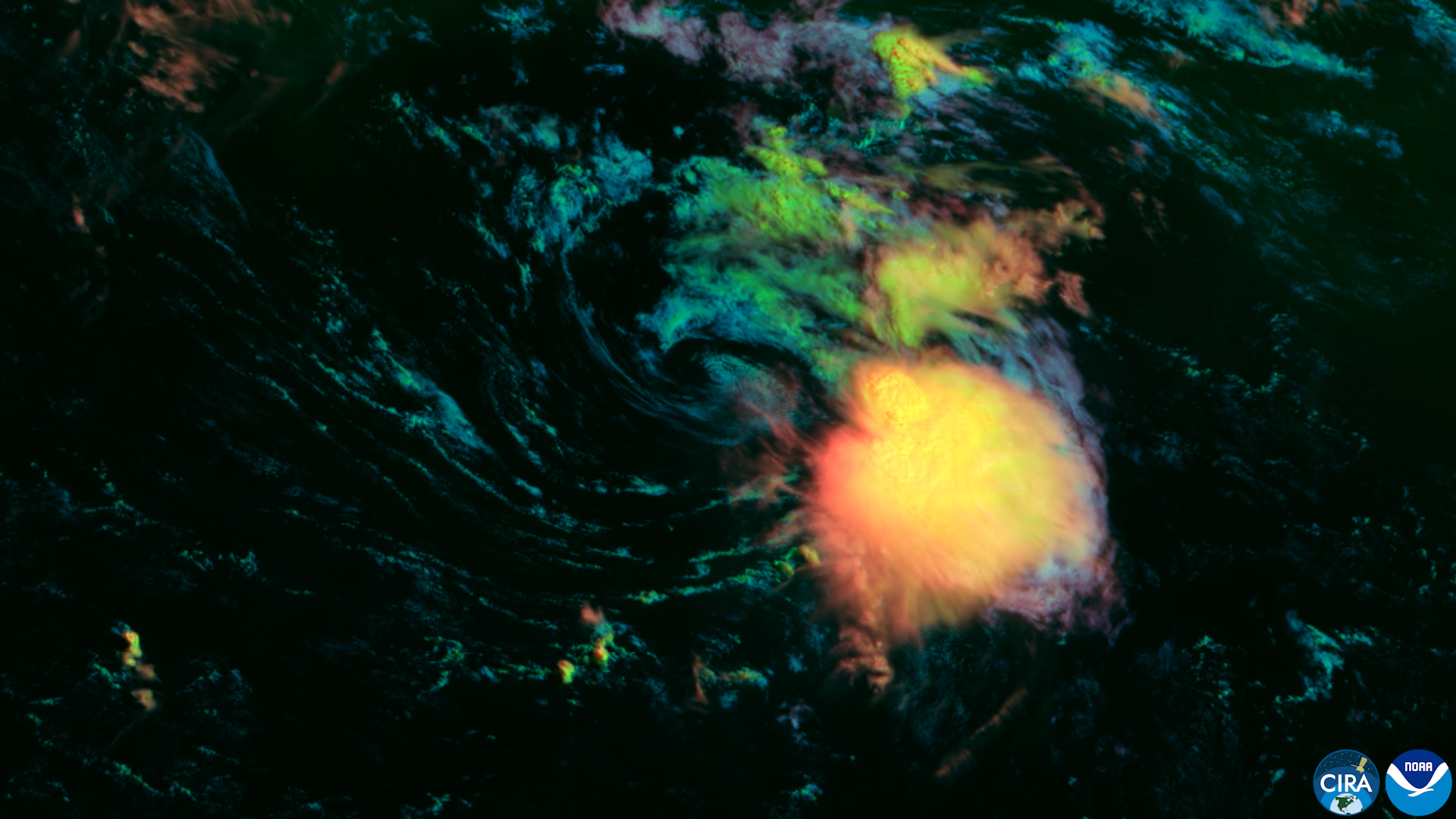
The 2026 Atlantic hurricane season broke a satellite-era record Friday, Sept. 11, for the latest start without a single hurricane forming.
The National Hurricane Center said on X that the record was officially surpassed as of 8 a.m. that day. The previous latest first-hurricane dates belonged to Gustav in 2002 and Humberto in 2013, both of which formed on Sept. 11 of their respective years. Five tropical storms have formed this season, but none reached the 74 mph winds needed to qualify as a hurricane.
The quiet doesn't mean safety for Palmetto Bay and Cutler Bay. The Gulf of Mexico is the one area where wind shear has stayed low, and Gulf storms tend to intensify later in the season, multiple forecasters told the Associated Press. Water surface temperatures around Florida and the Gulf are at record highs, Patch reported, providing fuel for any system that does develop. Fox 35 meteorologist Noah Bergren warned on social media that if an October tropical system forms off a cold front dropping south, record-warm Gulf waters could power a close-to-home storm.
Miami-Dade County's Water and Sewer Department (WASD) said its three water treatment plants can run on backup power for up to two weeks without supplemental deliveries, according to WASD director Jay J. Fink. The department recommends residents store one gallon of water per person and pet per day for seven days once a hurricane warning is issued.
El Niño is driving the quiet season. The climate pattern increases wind shear over the Atlantic, disrupting the calm conditions storms need to organize. University at Albany atmospheric science professor Kristen Corbosiero told the AP that wind shear between Africa and the Caribbean is about 45 mph higher than what a tropical cyclone can withstand.
Storm activity in the Atlantic stands at just 7% of normal, according to Colorado State University hurricane expert Phil Klotzbach, as the AP reported Saturday, Sept. 12. Separately, overall storm energy measured by Accumulated Cyclone Energy (ACE) sat at 4.4 units as of Sept. 11, compared to a historical average of 60.5, according to WPLG meteorologist Michael Lowry.
"I don't think anyone really foresaw it being this quiet," University of Miami hurricane expert Brian McNoldy told the AP.
Both AccuWeather and the National Oceanic and Atmospheric Administration (NOAA) have cut their seasonal forecasts. AccuWeather now expects eight to 11 named storms, down from its original March forecast of 11 to 16. NOAA reduced its outlook to seven to 13 named storms and raised the probability of a below-normal season to 75%.
A 3,000-mile cloud of Saharan dust was expected to reach Florida by the week of Sept. 14, temporarily suppressing storm formation. But the AP noted that experts pointed to 1992 as a warning: that season started late and still produced Hurricane Andrew, which devastated South Florida.
The hurricane season runs through Nov. 30. Residents can monitor forecasts at nhc.noaa.gov and report flooding or storm damage by dialing 311.




.jpg)