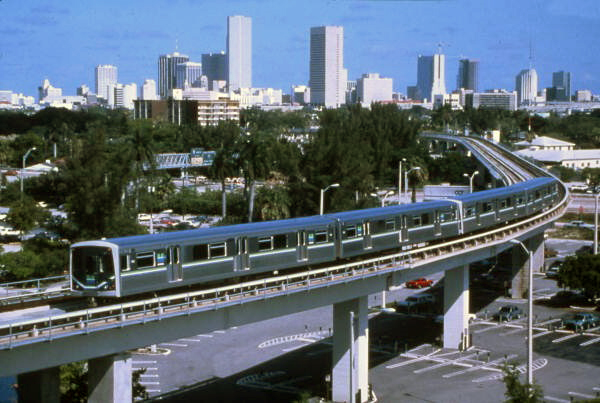
The same Metrorail network that Palmetto Bay and Cutler Bay riders use daily just handled its biggest test: five weeks of FIFA World Cup crowds that pushed more than 230,000 fans through the system on match days alone.
Miami-Dade County and the FIFA World Cup 2026 Miami Host Committee released official transit and economic data Thursday, Aug. 6, marking the tournament's conclusion. Combined, Metrorail, Game Day Express shuttles and Metromover logged more than 1.2 million trips across the event. Metromover ridership ran 185% above its normal average during the 24-day Fan Festival at Bayfront Park, recording 836,000 trips. Game Day Express shuttles moved 203,000 passengers to and from the stadium.
Nearly one in four fans reached the stadium by public transit.
"We proved we can safely and reliably move hundreds of thousands of people during one of the world's biggest sporting events, and our system performed exactly as planned," DTPW Director and CEO Stacy Miller said at the Aug. 6 celebration.
The South Dade connection
Those numbers matter here because the South Dade TransitWay's Metro Express BRT, which launched Oct. 27, 2025, connects Palmetto Bay and Cutler Bay riders directly to the Dadeland South Metrorail station. That station is the gateway to the rail network that absorbed World Cup crowds. Riders along the 20-mile corridor pay a single fare and transfer free to Metrorail.
The $300 million Metro Express system, funded equally by Miami-Dade County, the Florida Department of Transportation and the Federal Transit Administration, runs 14 stations on dedicated lanes along US-1 from Dadeland South to SW 344th Street. It is one of six rapid transit corridors in the county's long-range SMART Plan.
No data has been released showing how many Palmetto Bay or Cutler Bay residents specifically used Metro Express to connect to World Cup services. But the county's stated goal is to convert the tournament's momentum into higher everyday ridership across the network.
Economic lift across the region
Preliminary data from the Greater Miami Convention and Visitors Bureau showed hotel revenue per room rose 27% over the full tournament period. Partner hotels commanded average daily rates 33% higher than the same window last summer during the first six matches, June 15 through July 3. More than 500,000 fans attended seven matches, and 600,000 people visited the Fan Festival over 24 consecutive days.
Miami-Dade Mayor Daniella Levine Cava said the county will build on the World Cup by encouraging more residents to choose public transportation.
Upcoming community events
- Aug. 22: Free opening reception for Gullah Geechee art exhibition at Deering Estate
- Through Aug. 20: Back-to-school sales tax holiday

.jpg)