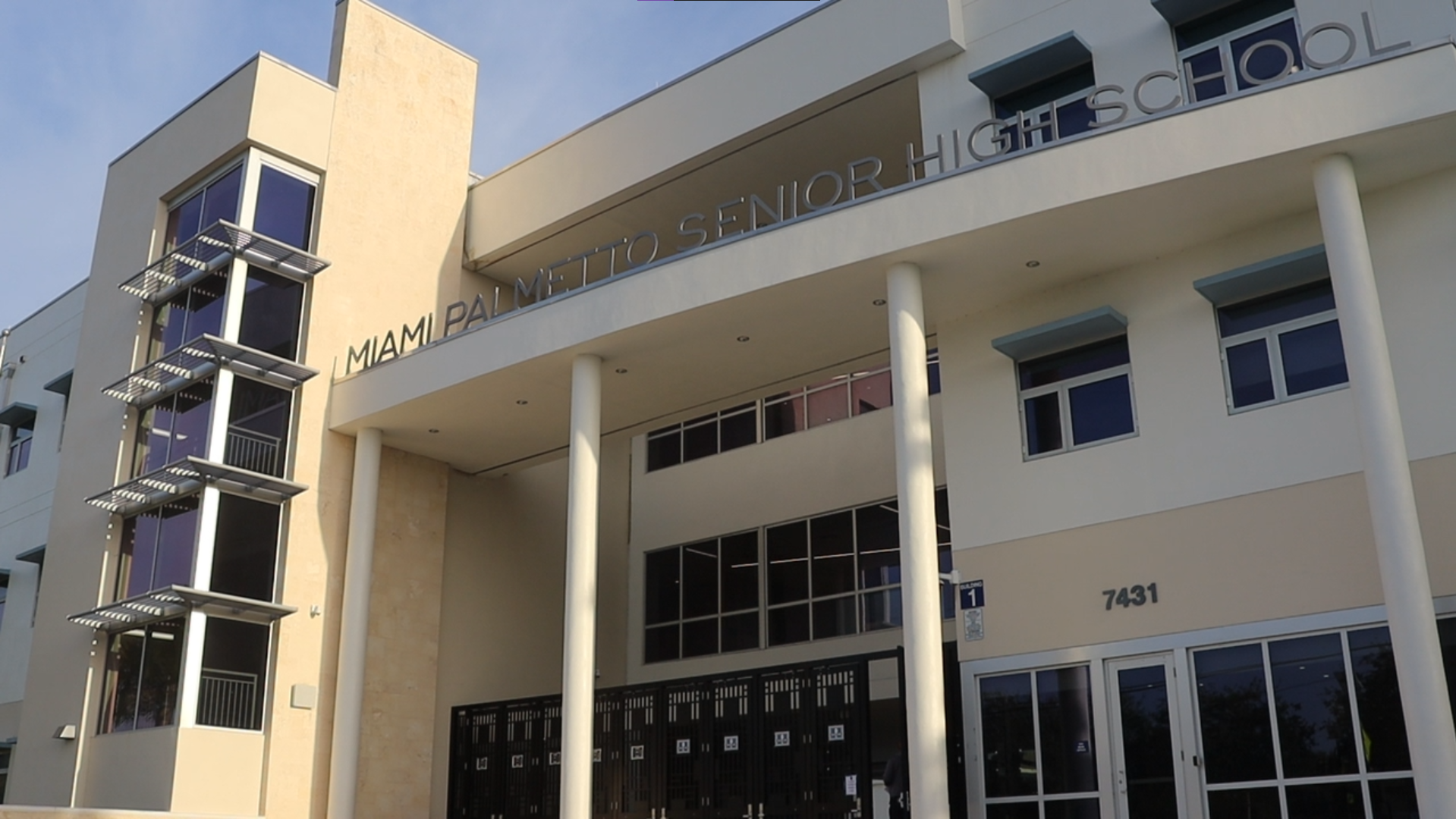
More than 80% of Miami-Dade County Public Schools campuses have lost students since 2012. The shrinking enrollment is driving budget cuts across the district, with consequences Palmetto Bay and Cutler Bay families will feel.
Of the 316 campuses with attendance data from February 2012 to February 2026, 254 have seen enrollment decline, the Miami Herald reported Saturday, Aug. 29. Traditional public school enrollment has fallen from about 307,000 in 2012 to roughly 217,100 expected this school year. On the first day of school Aug. 13, just 215,078 students showed up, about 15,000 fewer than the prior year's opening count of 230,172.
For the first time, charter school enrollment also dropped, falling from 86,913 to 85,473 on opening day, according to a separate Herald report. District spokesperson Elmo Lugo said enrollment in district-run schools landed 5,333 below projections.
The district's $7.36 billion budget for 2026-27 reflects a 3.6% cut in operating expenses and a more than 5% drop in traditional public schools' budgets. District officials identified enrollment decline as the primary cause.
Few schools meet the target
Only 79 of the district's more than 300 active campuses meet an 80% utilization target set in a strategic plan the board adopted in 2025. The utilization rate measures enrolled students divided by a school's capacity. Average utilization stood at about 66% when the plan was adopted. It has since slipped about one percentage point.
The district aims to reach 80% utilization across campuses by 2031. About 77 schools, roughly 25%, currently operate below 50% capacity. The nine schools the board closed in summer 2026 averaged about 35% utilization.
The shift is visible in South Dade
No Palmetto Bay or Cutler Bay school appears on the Attendance Boundary Committee's (ABC) latest watch list of 27 campuses. But the enrollment pattern is reshaping nearby schools.
Miami Killian Senior High, a majority-Hispanic South Dade school with capacity for nearly 3,200 students, enrolled about 3,700 two decades ago. By February 2026, that number had fallen to 503. It opened this school year with 430 students, using just 20% of its building, according to state estimates.
Three schools drawing from Killian's Kendall attendance boundary each enroll more Killian-boundary students than Killian itself: Coral Reef Senior High, Terra Environmental Research Institute and Palmetto Senior High. All three operate at or above capacity, the Herald reported.
More closures signaled
Outgoing Superintendent José Dotres said "the consolidations will increase in number." Incoming superintendent Rafael Villalobos, the board's unanimous pick to succeed Dotres, said Saturday at his introductory press conference that the district needs to "do a little bit more, a little bit faster."
In an Aug. 13 interview with the Herald, Villalobos described a tiered approach. The nine schools closed this summer were "tier three," with enrollment at 200 students or fewer. Next comes "tier two."
Villalobos said schools with 250 to 350 students in buildings designed for 1,000 or more are next. "Those schools are not being efficient fiscally, so we've got to make sure we combine them," he said in the Aug. 13 interview.
Equity concerns persist
The closures fell hardest on Black communities. Seven of the nine schools closed or consolidated this summer had majority-Black student populations, even though Black students make up about 20% of enrollment in district-run schools, according to a Miami Herald editorial analysis. Twenty-two of the 30 schools with the lowest utilization rates sit in Black communities.
Marguerite Roza, director of the Edunomics Lab at Georgetown University's McCourt School of Public Policy, called the closure of nine schools "low" given the scale of the enrollment drop. She pointed to a broader demographic force.
"The real villain is young people. They're not having enough kids," Roza told the Herald.
Lugo said in an Aug. 25 statement that the ABC process aims to protect the district's fiscal health while redirecting dollars to classroom instruction and teacher pay. The ABC's list of 27 schools includes 12 labeled "reassessed," meaning there will be an impact to the school in its present form, and 15 "under review." All 12 reassessed schools have utilization rates of 50% or below. No next committee meeting date has been announced publicly.
.jpg)